Review: Matic Robot Vacuum
The quiet revolution in home cleaning. Every once in a while, a product comes along that doesn't just do its job better—it completely rethinks what the job should be. Matic is that kind of product.
The quiet revolution in home cleaning.
Every once in a while, a product comes along that doesn't just do its job better—it completely rethinks what the job should be. Matic is that kind of product.
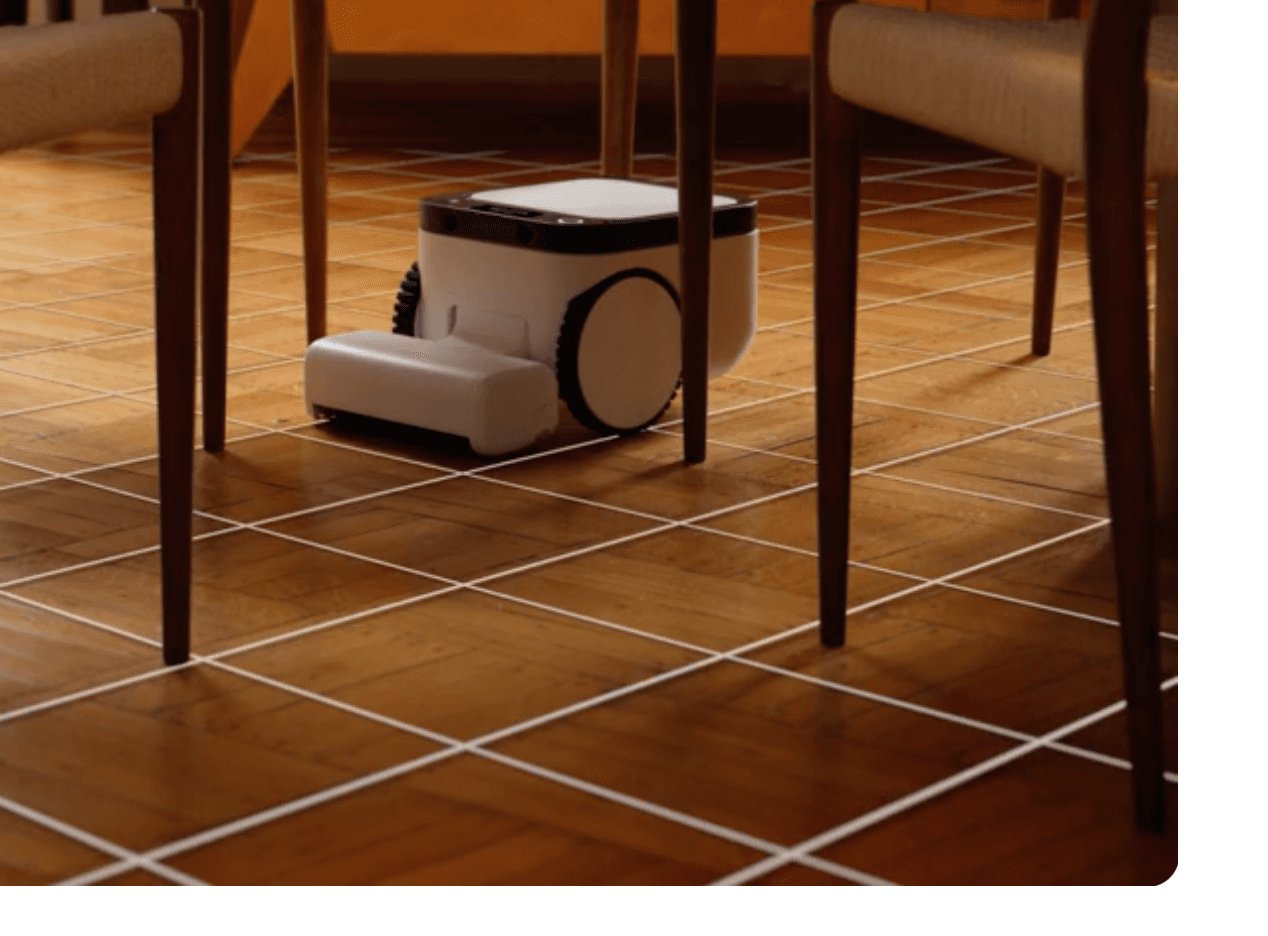
This isn't another overpowered, oversized, "look-at-my-dock" robot vacuum. It's small, calm, and almost human in how it moves through a space. Built around Nvidia's Jetson Orin chip, Matic doesn't just map your home—it learns it. The result? A robot vacuum that's not trying to impress you with specs. It's trying to quietly make your life easier.
Why It's Brilliant
Mapping that feels alive. Six RGB-infrared cameras give Matic a real-world sense of color, depth, and even darkness. It doesn't need all the lights on—it just gets to work.
Absolute navigation. Instead of constantly re-orienting itself like most vacuums, Matic understands where it is, even if you pick it up and move it across the house.
Thoughtful design. The waste bag handles both wet and dry material (with diaper salts—yes, really) and includes a built-in HEPA filter. No separate replacements, no messy water tank.
A beautifully simple app. The 3D map looks eerily accurate—down to the furniture. You can zoom, draw areas to clean, toggle modes, or even "fly" through your home in virtual view.
In Real Life

When it rolled out of the box, it greeted us with "Hello, So Family." My kids instantly fell in love—it's cute, calm, and it never yells for help like other vacuums that get lost under a chair. It runs quietly enough during TV time, which says a lot in a house with kids and dogs.

Cleaning performance? It's methodical: full pass, edges, and even toe-kicks. That last bit—the tiny space under your sink—Matic nails it. No other robot vacuum I've tested has ever managed that.
It doesn't have voice control or gesture features (yet), but those are coming as software updates. For now, I'll take quiet reliability over a "smart" device that screams for attention.
The Glimpse of What's Coming
What Matic really proves isn't just that robot vacuums can finally work the way we've always wanted — it's that humanoid intelligence in machines is no longer science fiction, it's emerging from thoughtful engineering choices like this.
This isn't a "smart device." It's a quiet signal of what happens when you combine real-time spatial awareness, edge AI, and behavioral learning into one self-contained system. Matic doesn't follow a script — it observes, adapts, and improves with every run. That's the exact pattern we'll see as robotics evolves from task-specific machines to context-aware companions.
If a small household robot can map, reason, and act gracefully in a messy, unpredictable environment like a family home — then we're already halfway to a world where humanoid robots can move through human spaces naturally, safely, and intuitively.
Matic isn't pretending to be a person. But it's showing us what happens when technology starts to think a little like one.