Biomedical research · 2014
Clinical-grade signal from a drop of blood.
A label-free impedance platform used nanoporous alumina and gold electrodes to quantify cancer biomarkers in small biological samples without fluorescent tags.
The question
Sensitivity had to coexist with small sample volume, portability, and performance in complex biological material.
The outcome
The platform was tested across prostate, breast, and lung cancer applications and contributed to an issued biosensing patent portfolio.
Why it matters
The project established a pattern that still shapes Anjan's work: translate a hard-to-observe signal into something a person can inspect, compare, and act on without hiding the uncertainty.
- Role
- Doctoral researcher and named inventor
- Collaborators
- Dr. Shalini Prasad and UT Dallas research collaborators
- Duration
- Doctoral research program
- Period
- 2014
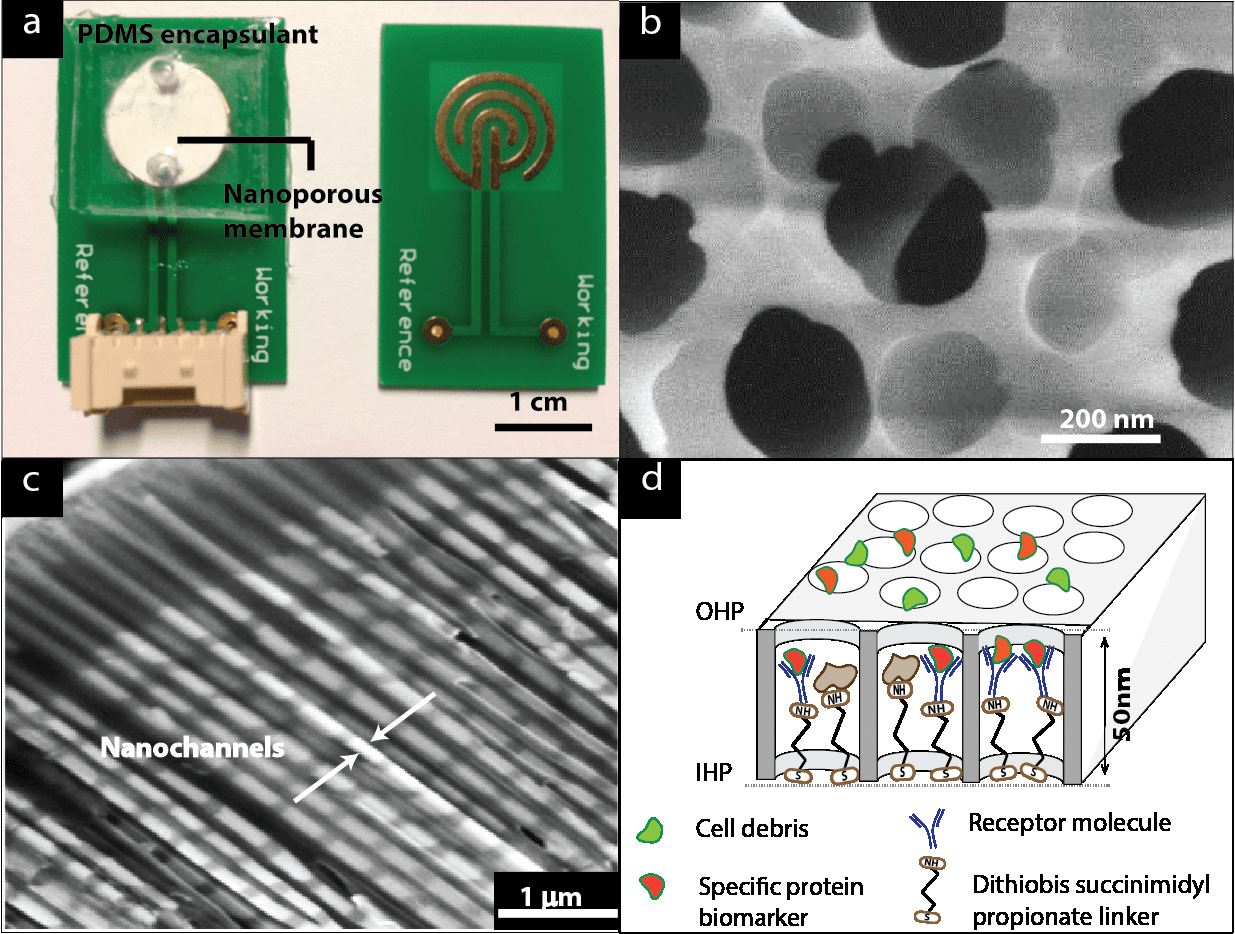
The central design move was to make the fluid-sensor interface do more work. Nanowells concentrated binding events inside the electrical double layer so impedance changes could become a quantitative signal.
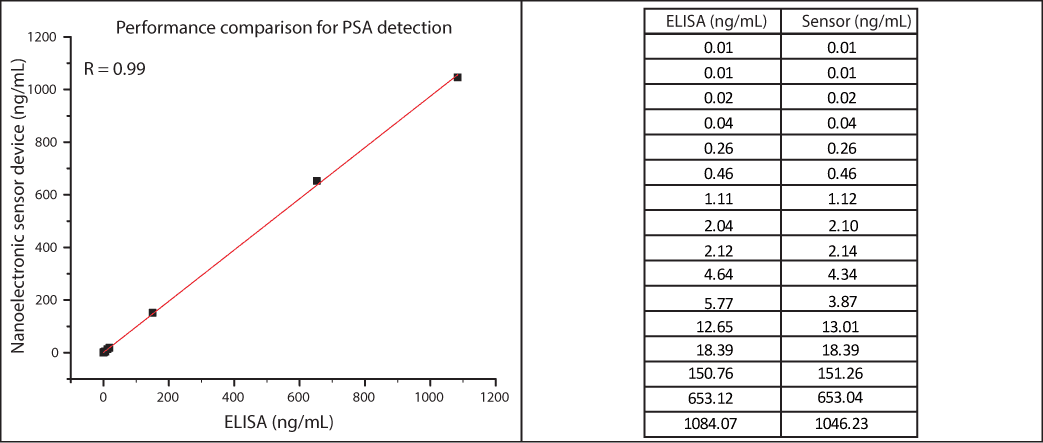
Compared with the Beckman Access reference across 17 patients.
Reported lower detection concentration for the PSA study.
Designed for small-volume point-of-care workflows.
Evidence atlas
Inspect the evidence behind the claim.
Explore the figures and the findings behind them.
Research evidence 01
From device to nanochannel
The same artifact connects the physical sensor, the 200 nm pore structure, and the molecular capture interface.
FindingDevice and interface characterization from Anjan's doctoral research archive.
Research evidence 02
Reference-assay comparison
The nanowell result tracked the Beckman Access PSA reference across patient samples, including a wide concentration range.
Finding17-patient PSA cohort; reported linear correlation R = 0.99.
Research evidence 03
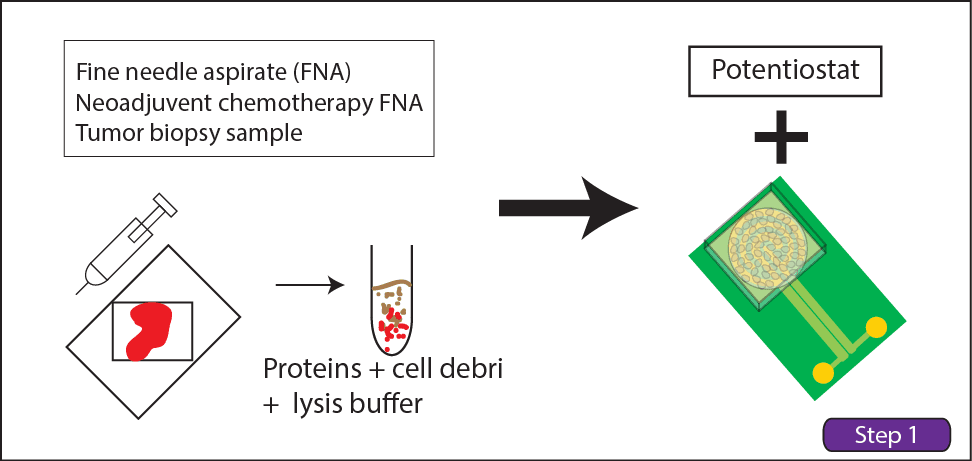
A workflow designed to leave the lab
Small-volume sample preparation and electrical readout were designed around a point-of-care path, not only the sensing surface.
FindingIllustrated workflow for fine-needle aspirate, biopsy, or cell-lysate samples.
Research evidence 04
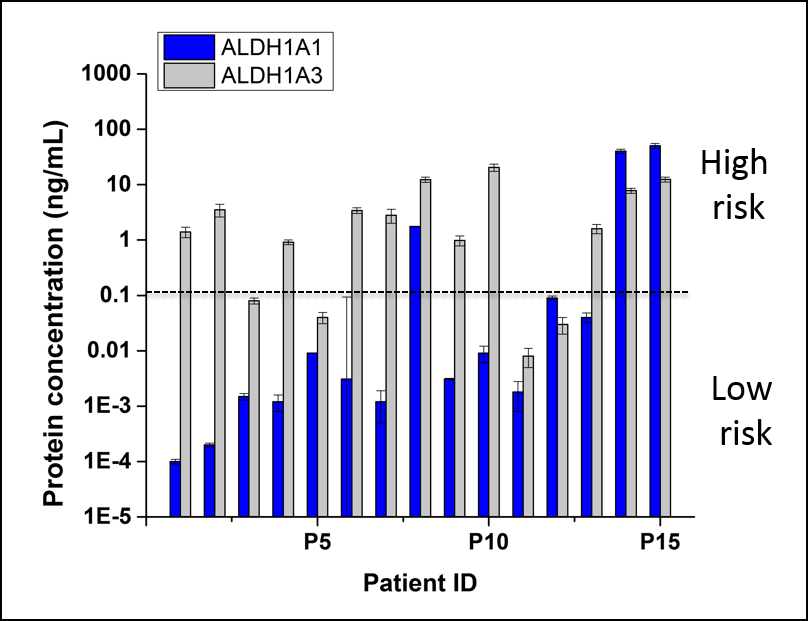
From concentration to risk pattern
Breast-cancer work profiled ALDH isozyme concentrations across patient material to distinguish risk patterns.
FindingExploratory patient-risk profiling from the breast-cancer research program.
Consequential decisions
Where the work changed direction.
These choices shaped the architecture, the evidence, or the way the system could be used.
Engineer the interface
A nanoporous alumina membrane created confined sensing wells over concentric gold electrodes. Geometry, surface chemistry, and the electric field were treated as one coupled design problem.
Stay label-free
The sensor read binding through non-faradaic impedance instead of relying on fluorescent or enzymatic labels, reducing workflow steps and supporting portable measurement.
Validate against clinical reality
The work moved beyond buffer studies into serum, whole blood, cell lysates, and biopsy material. PSA results were compared directly with a reference assay across a 17-patient cohort.